My account

 Services

Pedestrian crossings
We provide pedestrian crossings at road junctions and busy crossing points to protect road users and help pedestrians cross the road easily.
Types of crossing
| Type | Description |
|---|---|
| Zebra | Zebra crossings are noticed easily because of the black and white lines that go across the width of the road. |
| Pelican | Pelican crossings have zig-zag lines and traffic lights. They're controlled by the pedestrian pressing the button on the 'wait' box. Pelican crossings can be in a straight line or staggered. Crossings that go straight across the road should be treated as one crossing, even if there's a central island. Staggered crossings (those which aren't in a straight line) should be treated as separate crossings. |
| Puffin | Puffin crossings look very similar to pelican crossings but have sensors on top of the traffic lights. The sensors detect if pedestrians are crossing slowly and can hold the red traffic light longer if needed. |
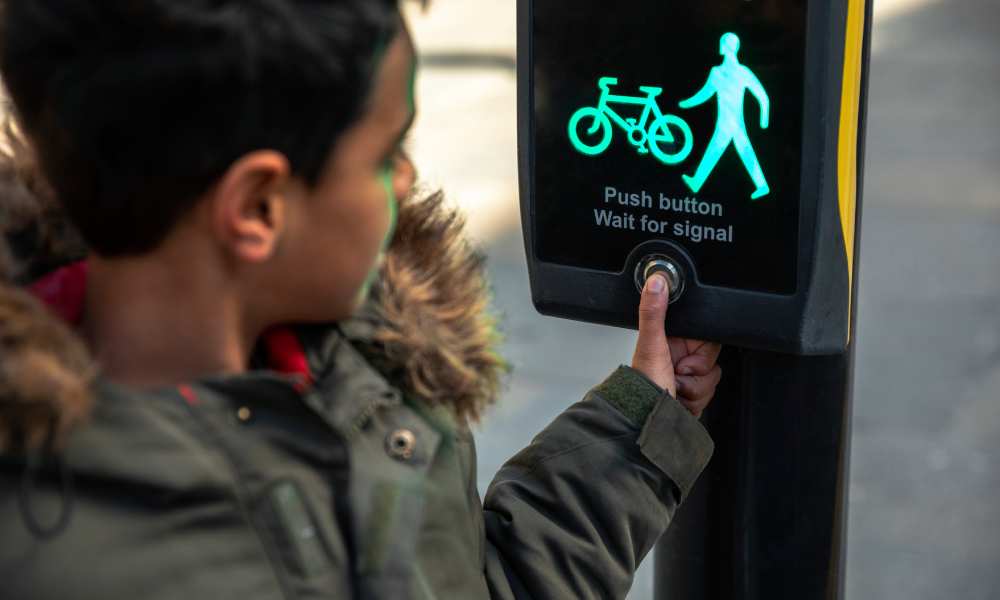
| Toucan | Toucan crossings are similar to pelican crossings, but they allow cyclists and road users to cross. |
| Pegasus | Pegasus crossings are similar to toucan crossings but allow horse riders to cross too. They include a second crossing place next to the cyclist and/or pedestrian crossing, and have separate approaches and light controls. They're normally used outside race courses or in areas where horses are trained. |
| Traffic island | Where there isn't the need for a pedestrian crossing, a pedestrian refuge or traffic island may be used. These narrow the road and allow pedestrians to cross in two halves, with a safe place to wait in the middle. Pedestrians should cross with care as drivers have priority at traffic islands. |
You can find details of how to use pedestrian crossings in the Highway Code.
Where we can install crossings
We can only install a pedestrian crossing at sites that meet the national assessment criteria. This takes into account:
- traffic speed
- how hard it is for pedestrians to cross the road
- the number and nature of personal injury accidents (mainly those that involve road users)
- the volume of traffic throughout a given day compared to the number of pedestrians crossing the road in an area - this is known as the 'frequency of use'
- site conditions/nature of the road and constraints
- funding and available resources
You can read about the requirements for installing a pedestrian crossing in the government's traffic signs manual.