 My account

 Services

Reducing our emissions
We want to protect Barnsley for future generations. A key part of this is moving to more secure energy sources supplied and maintained in the UK.
We're working to reduce our emissions by being more energy efficient and using more clean energy, such as heat and solar power.
In 2019, the council pledged to act faster in response to the changing climate by introducing targets to reduce council-operational emissions by 2040. Through partnership working, we want to support the rest of the borough to do the same by 2045.
What we're doing
We’re working on lots of projects to reduce our emissions and transition to more energy secure technologies.
We approved a Sustainable Energy Action Plan which guided our carbon reduction work. The key aims of the action plan are to:
save money by cutting bills and reducing fuel poverty, making homes and buildings warmer and cheaper to heat
promote sustainable travel, such as walking, cycling and electric vehicles
generate green energy by growing local renewables, for example: solar, wind, hydrogen and heat networks, and supporting community energy
move to 100% renewables, supporting the borough-wide transition by 2045
support the planning for climate risks like heat, flooding, fuel shortage and water storage.
We're in the process of preparing a new strategy and plan to reflect local priorities and needs.
The projects we're working on fall under six topics:
Energy efficiency and procurement of energy
Energy efficiency covers anything that can be done to use less energy. For example, adding insulation to a building or using better equipment. We also want to make sure the energy we buy comes from renewable sources.
We aim to use less energy by:
replacement of the Metrodome’s coal fired boilers with a gas combined heat and power unit, which has reduced emissions and improved air quality
an ongoing programme for the conversion of existing streetlights to more efficient LED lights
updating the heating and ventilation in council buildings, and installing solar panels to rooftops
ongoing home energy efficiency schemes which have supported hundreds of homeowners and private tenants to live in warmer homes which are more affordable to heat
continuous improvements to the energy efficiency of council homes by improving insulation levels through Berneslai Homes
Resource efficiency
Resource efficiency means making the most of the resources we have and wasting as little as possible. We do this by working as part of the Barnsley, Doncaster, Rotherham Waste Partnership to help households reduce their waste.
Sustainable transport
We'll provide sustainable transport and reduce emissions through the following:
Promotion of walking and cycling in the borough using Barnsley Bike Works, located within Barnsley Interchange.
A scheme to install electric vehicle (EV) charging in public car parks across the borough using funding from the Office for Zero Emission Vehicles (OZEV) On-Street Residential Chargepoint Scheme (ORCS), to provide EV charging for residents without access to off-street parking.
Leading on a project across South Yorkshire to provide additional electric vehicle charge point infrastructure.
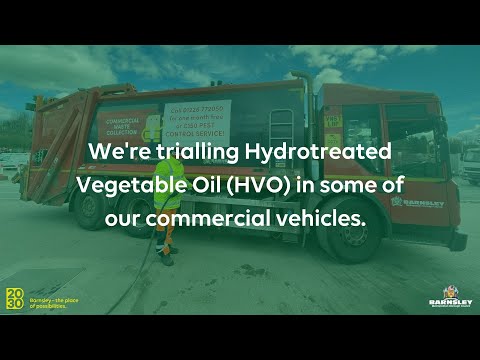
Replacement, on a phased basis, of our vehicle fleet with electric vehicles. Approval has been given for 25% of our fleet to be replaced with ultra low emission vehicles (ULEVs), and for 100% of our pest control fleet to be upgraded to electric vehicles.
Improving air quality with Barnsley’s Air Quality Action Plan, aiming to reduce industrial, domestic and road transport emissions. This includes plans to:
introduce emission standards for buses
introduce measures to reduce traffic congestion
encourage walking and cycling
work with heavy goods and bus fleet operators in order to reduce emissions
work with developers to minimise the air quality impact of new development
encourage the uptake of low emission vehicles and alternative fuels
Our Modeshift Stars programme - how we work with schools and businesses to help them support cycling and walking.
Funding of Active Travel Plan – Department for Transport-led schemes to encourage walking and cycling.
Funding for Transforming Cities – which includes active travel routes both on and off road, and also includes bus priority measures.
Renewables
Renewables are sources of energy that don't reduce and disappear with use like fossil fuels. Examples of renewable energy are solar panels that convert sunlight into electricity, and wind turbines that use wind power to generate electricity.
We'll work to use renewables by:
The design and build of solar panels into The Glass Works.
Making council homes greener by installing air source heat pumps, ground source heat pumps, and biomass boilers through Berneslai Homes.
Installing solar panels on roofs on council homes, allowing tenants to benefit from free, renewable electricity. Berneslai Homes have worked with Energise Barnsley to provide this, and the team is currently working on adding batteries to the solar panels to store electricity for times when it's not sunny.
Decentralised heating
Decentralised heating means heating our homes via zero or low carbon measures, away from traditional sources of heat. We'll be looking at the potential for expanding district heat networks, where several buildings are heated from a single source.
We'll do this by:
managing 24 district heat networks across Barnsley through Berneslai Homes
considering opportunities for expanding the 24 networks or setting up new ones, including looking at district heat networks from renewable sources of heat including naturally heated underground water from mines and sewers
Other projects
Other work being done to reduce emissions, transition to secure energy sources, and improve air quality, include the following:
Working with community groups to increase the number of trees planted in Barnsley.
Our Parks Services team are working hard to conserve our green spaces and biodiversity.
Our Warm Homes team, which work with households to help with energy bills and advise how to keep warm and healthy at home.
In the North Area of the borough, the charity DIAL runs its Warm Connections advice service, assisting residents to lower their energy bills and reduce social isolation.
Bringing partner groups together through Barnsley's Affordable Warmth Charter Mark. Here they share knowledge, skills and resources to tackle health differences caused by fuel poverty.
Yorkshire and Humber Climate Action Pledge
We've signed the Yorkshire and Humber Climate Commission Action Pledge. The pledge shows our public commitment to:
protect our organisation and stakeholders from climate impacts
reduce emissions
protect and restore nature
ensure a just and fair transition that leaves no one and nowhere behind
Signing this pledge also reinforces our commitment to support the Yorkshire and Humber Climate Commission and to take collective action to support the borough and region reach our environmental targets.
Frequently asked questions
What is climate change?
Greenhouse gas emissions which are trapped in the atmosphere cause an increase in global average temperatures, commonly referred to as global warming. However, increases in global temperature impact on global weather patterns which will mean local weather or our climate will change; this is commonly referred to as climate change.
What is the impact of a changing climate?
Over time the increased concentration of greenhouse gases in our atmosphere has had a number of effects on our climate. Effects of climate change include:
rising global temperatures and heat waves
melting of the polar ice caps (the ice at the north and south poles of the planet)
rising ocean levels (caused by the melting ice)
more frequent and more powerful storms
animals and plants threatened with extinction as their habitat is lost
droughts and wildfires
ocean acidification, as the ocean absorbs greater amounts of carbon dioxide
All of these effects are already visible and we estimate that currently human activity has increased the global average temperature by around one to 1.5 degrees C.
To try and prevent these global impacts local councils, business and national government are coming together to try and reduce the amount of carbon they emit and keep the global increase in temperature to within 1.5 degrees C of current levels.
What type of emissions do we need to reduce?
Carbon dioxide is one of a group of gases known as ‘greenhouse gases’. Greenhouse gases also include gases such as methane, nitrous oxide, ozone, and hydrofluorocarbons.
The main source of greenhouse gas emissions is the burning of fossil fuels such as coal, petrol, diesel, or natural gas. Coal emits more carbon than petrol or gas (lowest levels of carbon). These gases persist in the atmosphere, and an increase in the concentrations of these gases in the atmosphere is proven to cause an increase in global average temperatures, commonly referred to as global warming.
How can I reduce my emissions?
Measuring your carbon footprint is a great place to start when thinking about how you can reduce your emissions. There are lots of websites that allow you to calculate yours, such as on the WWF carbon footprint calculator.
Find out more about reducing your emissions.
Why aren't you aiming to reduce emissions by 2030?
We'll only commit to targets which are both achievable and deliverable; our existing 2040 date is both. If opportunities arise which will allow us to reduce emissions before 2040, we'll take advantage of these.
What is the Barnsley Air Quality Action Plan?
Barnsley’s Air Quality Action Plan, aims to tackle industrial, domestic and road transport emissions. Road transport related actions within the plan include:
introducing emission standards for buses
measures to reduce congestion
encouraging walking and cycling
working with heavy goods and bus fleet operators in order to reduce emissions by improving fuel consumption
working with developers to minimise the air quality impact of new development
encouraging the uptake of low emission vehicles and alternative fuels
What is the impact of trees?
Trees absorb carbon dioxide and potentially harmful gasses, such as sulphur dioxide, carbon monoxide, from the air and release oxygen. One large tree can supply a day's supply of oxygen for four people.
We've taken advantage of opportunities to increase the number of trees across the borough, and will continue to increase the amount where feasible to do so.